First of all, let me define my position. Then comes the 2nd paper. As we have seen: Context is very important, visit this interesting thread.
- I'm writing in an irreverent tone. (Don't tell me!?, I hadn't notice!, he, he, he.)
- I work for my own Institution at the moment, the founders know me well so I know they'll laugh too.
- I don't consider myself a teacher or educator. I just facilitate learning. People come to me with a situation they want to solve like: My son doesn't speak. My English is poor. I'm getting divorced. I need to give a presentation in English. I'm depressed, etc.
- I talked to Stephen, somewhat apologized for the tone of my posts and he said: "Go ahead, I don't care, I have a tough skin". So... no problem.
- My dad is
 a Spanish man born in Mexico. I'm bringing this to the table because the post title is the question he usually asked me when I was angry with him.
 - His question drove me even madder because I didn't speak English then.
- I knew that "pedo" was not an
- English word but I didn't know that "gorgory" didn't exist as an English word. I thought he was showing off and evidencing my ignorance.
George was born in Mexico, as far as Wikipedia is concerned, and he will mark this Second Paper so he may understand the meaning of the question. The title is irrelevant anyhow.
The point of emphasis of this Second Paper is that of the Educator. Why? Because I've taught for several years, 20 or more, while I just "designed" my first online Community of Practice site BaeL last March 08. There, as well as in our YH bael-pc group, I model what I preach.
The roles of educators are changing as shown by Tom Woodward in the following video.
The changing roles of the educators are many, as evidenced in this conversation. Those roles have been documented since the Ancient Greek Era, pity there is no evidence left on cave walls to see which was the role of the teacher in "Hunting Class I".
I won't bore you with a description of those roles. Depending on the context, the name and actual activities of the educator varies. Let's see some examples.
In ScholMAX the roles are: Educator, Special Education Assistant, Plan Specialist, Reading Tutor and Teacher Aid.
According to SchoolNet the roles of an ICT teacher are seven:
1.- Learning Mediator. 2.- Interpreter and Designer of Learning Programs and Materials. 3.- Leader. 4.- Scholar, Researcher and Lifelong Learner. 5.- Community, Citizenship and Pastoral Role. 6.- Assessor and 7.- Learning area/subject Specialist.
However, Emilia Potenza, who elaborates on those roles in her paper "The Seven Roles of the Teacher", describes herself as Curriculum Adviser. So, we may have a number eight role.
One of my co-students, the brave and brilliant Lisa Lane, mentions the roles as follows: Lecturer, Facilitator, Accountant, Curator, Master Artist, organic Gardener, Wizard and Insurgent.
While Lisa's view of the current Educator role empowers the teachers and invites them to change the system from inside out, it has not been explored yet and the consequences may be harmful for the teacher.
The role I put forward, which brings me back to my father, is the role of Lurer. In order to lure somebody you 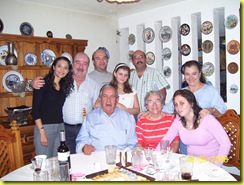 need to spare some time first to investigate your targeted person or group. You need to get involved first and find out hopes, desires, expectations, incentives, limitations, needs, interests, activities, etc. In sum, all that may be attractive for him/her or them. You also have to rely on the resources that you have and on the resources that your learners have access to as Nancy White points out and be creative to deliver the content you want to share.
The term Lurer also implies a decoy or a foolish way to achieve an outcome, this attitude also goes with me. If I have fun while learning, "my learners" or co-learners will have fun too and learn along with me. That's another key point, I'm usually learning what I'm teaching, the only difference between me and my learners is that maybe I have read a bit more on the subject or I have given a few more clicks to the tool we're using. When I try to use the tool, I laugh at myself and my clumsiness. Most of all, I give priority to the content I want to deliver regardless the selected tool while I listen to my learners shifting needs.
I think that Nancy White does something wonderful in her Full Circle Associates site.  The picture below was the opening slide at her talk at Elluminate, last Wednesday November 5th.
During her wonderful session, she showed us a shared, give and take, approach to education which needs collaboration to succeed. So far, she has been the liveliest presenter in CCK08 course. I really enjoy her remarks to Stephen! I wonder what would have happened if George had ben there. A recording of her presentation is available along with great notes taken by Christy Tucker. Nancy also posted an Online Community Purpose Checklist truly worth reading.
Another proposal is what Jokay Wollongong did when she created Jokaydia in SL. You can see here pictures of the site.
 In her office, she left a laptop open in SL, waited until someone asked what game it was to inquire about that teacher's subject. Once she knew the subject, she invited the teacher to visit SL with her and showed him/her in site what could be done to teach that subject. The ones hooked were given avatars and a project to bring their students to SL. Clever ha! She's participating in the Learning Technologies 2008 Conference
Depending on the context, the name and actual activities of the educator varies.
We need to evaluate very carefully the context. It's not the same to lure and adult than to lure a kid. With kids, safety comes first. Tom Whyte started an interesting thread asking if connectivism can be used for K-12 classroom. While we wait for responses, let me tell you that I see that the role of the educator in that particular context is as Gate Keeper or Guardian Angel. This role applies also when your learners are complete beginners even if they are adults.
I have a Mexican friend, Angeles Berman, who is Teaching the Teachers at her site "Maestrantes 2008". She has there a small group of teachers who are doing their Master Degree in Pedagogy and Education Practice with her. They are studying at the Universidad Pedagógica Nacional. Some of them did not  know how to use the Internet and it's really a joy to see them posting their work, pictures, debates, etc. at their Community as well as at their Wiki
I invite you to react as I did. While I couldn't shake off my father's authority, as many of you cannot shake your School Board, I lured him! So... start luring people!
I'll leave you with the important questions raised at the Moodle forum thread started by Sui Fai John Mak

References:
- Sui Fai John Mak, 2008. "Teaching the Teachers: A key to Student Success" Moodle thread. CCK08 course. http://ltc.umanitoba.ca/moodle/mod/forum/discuss.php?d=1074
- Maru del Campo, 2008. "Becoming an e-Learner" Community of Practice. http://bilingueactivoelear.ning.com
- Maru del Campo, 2008. "BaeL PC Group. http://mx.groups.yahoo.com/group/bael-pc/
- Tom Woodward, 2006."Education Today and Tomorrow" Henrico Co. YouTube video. http://www.youtube.com/watch?v=Fnh9q_cQcUE&NR=1
- SchoolNet SA and SCOPE, 2008. "ICT and the Roles of Educators". http://ace.schoolnet.org.za/cd/ukzncore2a/activities/core2a.flow.htm
- Emilia Potenza, 2008. "The Seven Roles of the Teacher" http://ace.schoolnet.org.za/cd/ukzncore2a/documents/core2a.curriculum-matters.htm
- I Kant et al, 2008. "Role for Educators" Moodle thread. CCK08 course. http://ltc.umanitoba.ca/moodle/mod/forum/discuss.php?d=1073
- Lisa Lane, 2008. "Insurgence for Emergence". http://lisahistory.wordpress.com/2008/11/06/paper-2-insurgence-for-emergence/
- Tom Whyte, 2008 "Reality Check" Moodle Thread. CCK08 course. http://ltc.umanitoba.ca/moodle/mod/forum/discuss.php?d=1079
- Nancy White, 2008. "Full Circle Associates" http://www.fullcirc.com/wp/
- Christy Tucker, 2008. "CCK08: Iterative, Appreciative Change" http://christytucker.wordpress.com/2008/11/05/cck08-iterative-appreciative-change/
- Nancy White. November 5th, 2008. "Elluminate Recording. https://sas.elluminate.com/site/external/jwsdetect/playback.jnlp?psid=2008-11-05.0706.M.ACEE335354DD13071EB33121158A62.vcr
- Tom Whyte, 2008. "Where Old Meets Now" http://whereoldmeetsnow.edublogs.org
- Jokay Wollongong, 2008. "Jokaydia.com Blog". http://jokaydia.com.
- Jokay Wollongong, 2008. "SL Jokaydia site". http://slurl.com/secondlife/jokaydia.
- Jokay Wollongong, 2008. "Jokaydia Flicker photo's collection" http://flickr.com/groups/jokaydia
- Learning Technologies Conference, 2008. http://www.learningtechnologies.com.au/index.cfm
- Angeles Berman, 2007- 2008. "My Learning Zone" http://mylearningzone.motime.com
- Angeles Berman, 2008. "Maestrantes 2008. Universidad Pedagógica Nacional" Community of Practice. http://maestrantesupn042.ning.com/
- Angeles Berman, 2008. "Institución y Práctica Docente" http://institucionypracticadocente.pbwiki.com/
- Universidad Pedagógica Nacional http://www.upn.mx/
- Nancy White, 2008. "Online Community Purpose Checklist" http://www.fullcirc.com/wp/resources/online-community-toolkit/online-community-purpose-checklist/


 ined FaceBook, I had so many friends already there that I started feeling concerned by my slow answer rate.
![clip_image002[4]](https://blogger.googleusercontent.com/img/b/R29vZ2xl/AVvXsEiloXOa322yo9wv-HufuM_0vxKZS93zw-fKjlbIoALeJrpMSMzhss43oikfHzGE1npTj8McW_B3bF2crLrBoX6ZWxR8FiG4Kujh1PzqJBnKrNRkAtDuAR-JvWGAzCpl5zYKTxvuia8h2G8/s1600-h/clip_image002%5B4%5D%5B2%5D.jpg)
![clip_image003[4]](https://blogger.googleusercontent.com/img/b/R29vZ2xl/AVvXsEjz_WZ5kbVdNJWoqmAVh4KcBlLduSJ6c2vJF2uTkMc0NzlUPy1mwSTbHdXVZxSPsYwbOJjzULg2cNC7Mp4z8QrOnKfef0-dnIULQi9cvQWhfapyTmpsA_oIM8Vajv-pCR8Eqi97ion6Y4Y/s1600-h/clip_image003%5B4%5D%5B3%5D.jpg)
![clip_image004[4]](https://blogger.googleusercontent.com/img/b/R29vZ2xl/AVvXsEhiPnSYehqChB0nz8z0-ACoCTcwLqe3tOClzYGjM8G0xeznFDEFoJ_U_ZuYsdvrL0zWiXQ8CTGgb07N0iv-VCYvthuylD3qoHrb4tnOitzAkhA2LXR52lkeaa7tf_k3ASi1dkcvaI1wwUo/s1600-h/clip_image004%5B4%5D%5B3%5D.jpg)
![clip_image005[4]](https://blogger.googleusercontent.com/img/b/R29vZ2xl/AVvXsEhzM1TrAWTiAh1h3nyaMzZDyzQb74Eh8uEmQk-NKwPCvyMgGL9bFLBWkxheNKmBBXZ94cocsS8QB6GxrBCjm_Q_xTmRVB_OQe0BjBvZD9CiRIbCksONmzsx-nDi5OG9xncdIhtfOM6U3nw/s1600-h/clip_image005%5B4%5D%5B3%5D.jpg)
![clip_image006[4]](https://blogger.googleusercontent.com/img/b/R29vZ2xl/AVvXsEh4IjaagLR56wpS0O0asfmiaLeHh9P6bYmqbnK7CoVCVMXgZWG28l1pFvpMG9QN4Y3C9pIQF2YR98-bHkL_xkq3IClCdCZefFbgg_dRXZH137GbItprp2tQHMt75g5V6OkJji0QFMvuIf8/s1600-h/clip_image006%5B4%5D%5B2%5D.jpg)

![clip_image001[12]](https://blogger.googleusercontent.com/img/b/R29vZ2xl/AVvXsEh5-XPnnPDcNeAmLwfghXsxCEuLjp2ambNPSVsgnv7XjNMdrzntUrmuBUPrpXGic-K-as9CXHylIPCMGa0ioLg4qiFG4jIVbRn_YsmKk-xA_TlpWzNK_1dJ0jbLy5lewiadiZKll-A6CWk/?imgmax=800)
![clip_image001[20]](https://blogger.googleusercontent.com/img/b/R29vZ2xl/AVvXsEgqU1wjkU28oalP5vAaaCB2odxdJLhoPXllmVIO3KeAbS0tyE8dXQVVVIhHHsZzGefwCaODdl9ebln5Wo_FcpA1JccTEOcDUS6bBJaD4IZirVEFmUElF3ZZf0AQ0CTZTb_sDVPeYNqQYBk/s1600-h/clip_image001%5B20%5D%5B2%5D.gif)
![clip_image001[18]](https://blogger.googleusercontent.com/img/b/R29vZ2xl/AVvXsEjo428Dsuheo_tvUdIuh3DHhJLGH5AbK-Y6fjXrn7T0BWaLKArJ0-usQiUztWgsgxamwNFrGBF7a_uTMNlNgmen1QwSbzJyFKe6WQ_f6St_zakJyaF70S4o6cqhSOpFr-0Sd_4-vCGOPo0/s1600-h/clip_image001%5B18%5D%5B2%5D.gif)
![clip_image001[16]](https://blogger.googleusercontent.com/img/b/R29vZ2xl/AVvXsEg_w-3C78GsdrRky67KqSzVzJkpdRIOd9X_nhr_PlNXZUN1AvjRBUTv29T-1cXOHbBaIVrDtPJdNqRsLfr9VJYWcg1wAJOMOIznxFshyphenhyphenKmCHtr9HsL3EpVgNtRMGj5x1x4njJm0tt_urbQ/s1600-h/clip_image001%5B16%5D%5B2%5D.gif)
![clip_image001[14]](https://blogger.googleusercontent.com/img/b/R29vZ2xl/AVvXsEgixUT6nvmn36jLifl6ZG-c6M0YEvZAoE522MblMGJy-jyF5Z_wOfuP_ko2hc6n3UV7oy1JF8cw_79ZbZEoA6U9p-3_KmRN1LaBJTa85qyQYKBJa2mqxDAqBo-GyDBbvNGukuBAeMLX3NY/s1600-h/clip_image001%5B14%5D%5B2%5D.gif)
![clip_image001[10]](https://blogger.googleusercontent.com/img/b/R29vZ2xl/AVvXsEgkEieNiool2TVidhznWTkoLOCPVg-KtbItjMgdbvbsWOzsW5QSZOy07J9ki6SIayjTCyWCfkh9yNRvFNghd1is8E180pFZ2s2pYJeCyuJK8aYJPR80R9GY2_OcYW2Lj52c1rI4AYPheF0/?imgmax=800)
![clip_image001[8]](https://blogger.googleusercontent.com/img/b/R29vZ2xl/AVvXsEjkMcrMeoB4AcFEMkJdcNDHt9D9d7Z2oy7XACMS1LH3P0JTcbCnn9_wKG1ol7qsTWoxvjumM9n6XtXh-w4Y2xQF1XRE6zUULoFM8GLKsSBcgzH6m9y58Zn3bUvnTGHA4UnYmEuQWZUBePs/?imgmax=800)
![clip_image001[6]](https://blogger.googleusercontent.com/img/b/R29vZ2xl/AVvXsEhey2e7H1yw205DpC3hxoJudS9KS6LoL-iAt02gfLeLiONr3deJXmO-_kYRfICtesc3p3kpeZJOYSL284rDU36UlgMeRGauDKc2qUXRx6xypcX5O6oPwGgmT3pAsRSD55U9UQRdKscewyM/?imgmax=800)
![clip_image001[4]](https://blogger.googleusercontent.com/img/b/R29vZ2xl/AVvXsEgLtrDCC3sL2n8MzQjpRPG_0_iymT9u5S7bSGpti1xTHWAU-BhGY5D8Sf3XrmFo-_8CXqzaSJq_xpun67PPC77ZoiNmmo5WES345RTNXMcGRYfa8Zp_DKhHJPmlE9XILha6l0qmy68vFew/?imgmax=800)


